Only your org and invited staff log in here.
Players, parents, coaches & officials.
We support 30+ sports and keep adding more.

Ice is the most expensive hour in youth sport, and a hockey organization is really an ice-allocation business with a team attached. Ligue holds the registrations, the rink slots, the locker-room logistics and the game sheet together — so the hour you paid for is used, the right players are on it, and the goals and saves land in the standings without a second entry.
Register players from 8U to 18U with a form that captures date of birth for the division, position, previous level and the medical consents a contact sport requires. Goalies and skaters can be asked different questions, which matters when a division needs two of one and sixteen of the other.
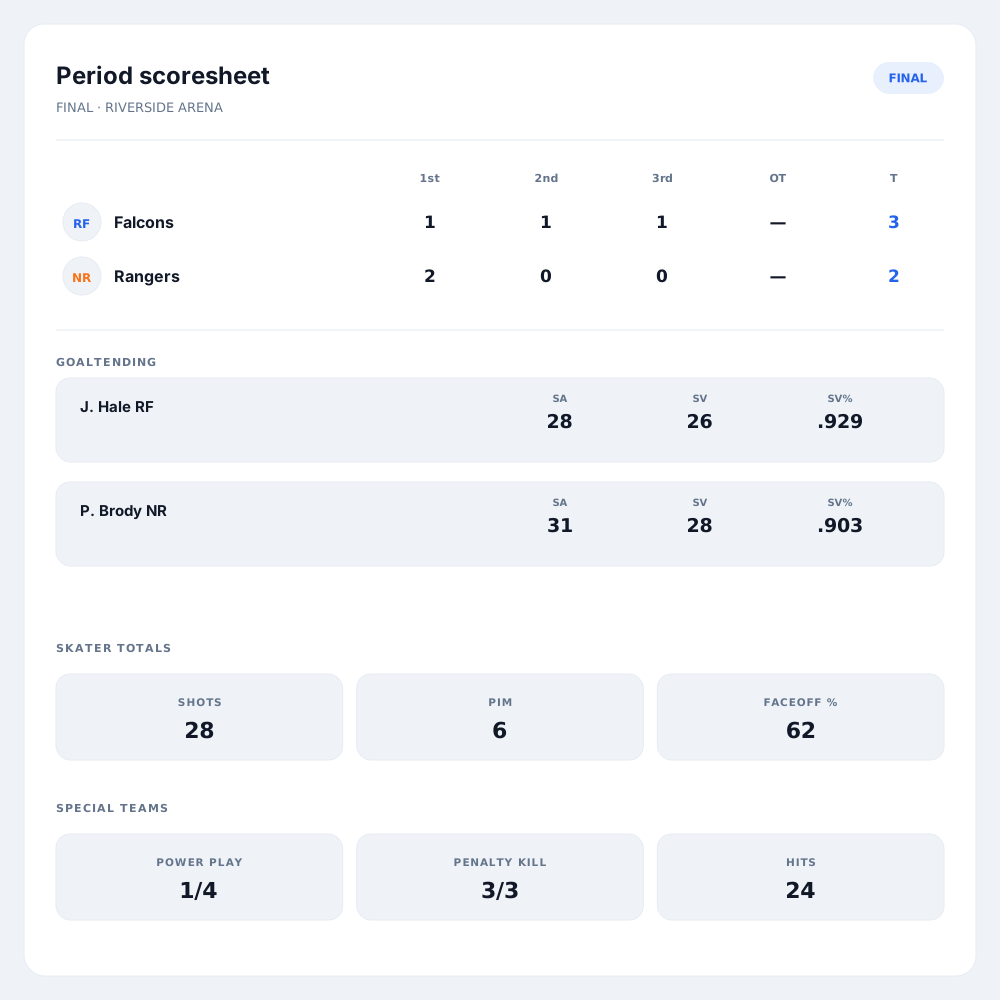
Score the game period by period — goals, assists, penalty minutes, shots on goal, saves — and the game sheet, the skater totals, the goaltending lines and the standings all build from that entry. Special teams numbers come out of the same record rather than a separate tally.
Collect registration, ice-time levies and tournament fees by card, ACH or Apple Pay, with instalments across a long winter. Ice is billed in large blocks, so spreading a family’s share over the season is usually the difference between a full roster and a half one.
Message one team about a rink change rather than the whole association, keep coach access separate from parent access, and background-check every adult around junior hockey from the same staff record.
Run hockey leagues, tournaments, camps, clinics, academies, and clubs — all from the same platform.
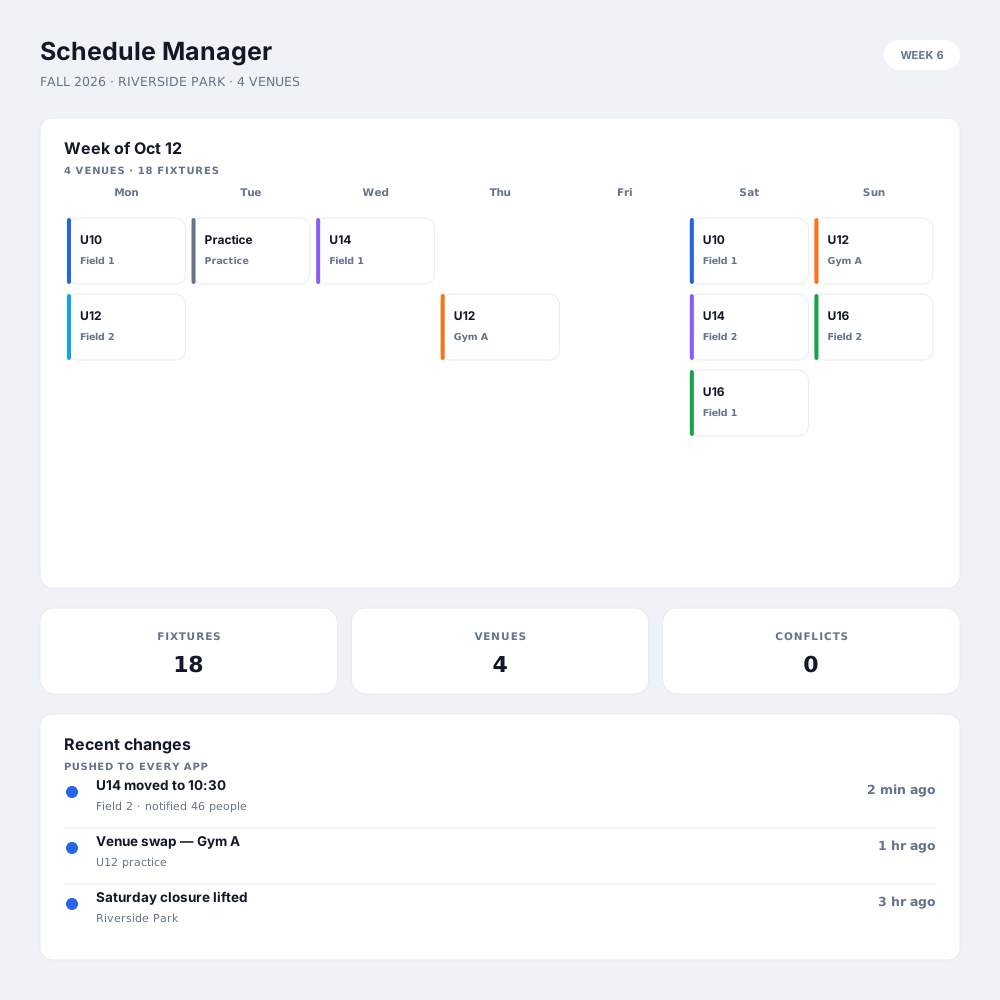
Ice time and rink slots are the scarcest resource you have and the one everything else bends around. Assign slots per team, see what each sheet of ice is carrying, and spot the clash while you are still building rather than when two squads arrive for the same hour.
8U through 18U divisions come from the date of birth collected at registration, and a player moving up a level keeps their record. Eligibility is checked against what you collected rather than against what someone remembers about a birthday.
Locker rooms and game-day logistics are the unglamorous half of hockey — who is in which room, what time the squad is on the ice, which adults are supervising. Put it on the same calendar as the fixture and the whole team is reading one set of instructions.
Goals, assists, penalty minutes and save percentage build from the game sheet, so a player’s season line and a goaltender’s numbers are accurate without a parent keeping score in the stands. Records carry across seasons and levels.
Yes. Ice slots are scheduled per team against the rinks you have, so you can see what each sheet is carrying and catch a double-booking while you are building the schedule.
Yes. Shots, saves and save percentage come out of the game sheet alongside skater goals, assists and penalty minutes, so a goaltender’s season line builds automatically.
From the date of birth collected at registration, checked against your association’s banding, with a player moving up a level keeping one record and one set of career numbers.
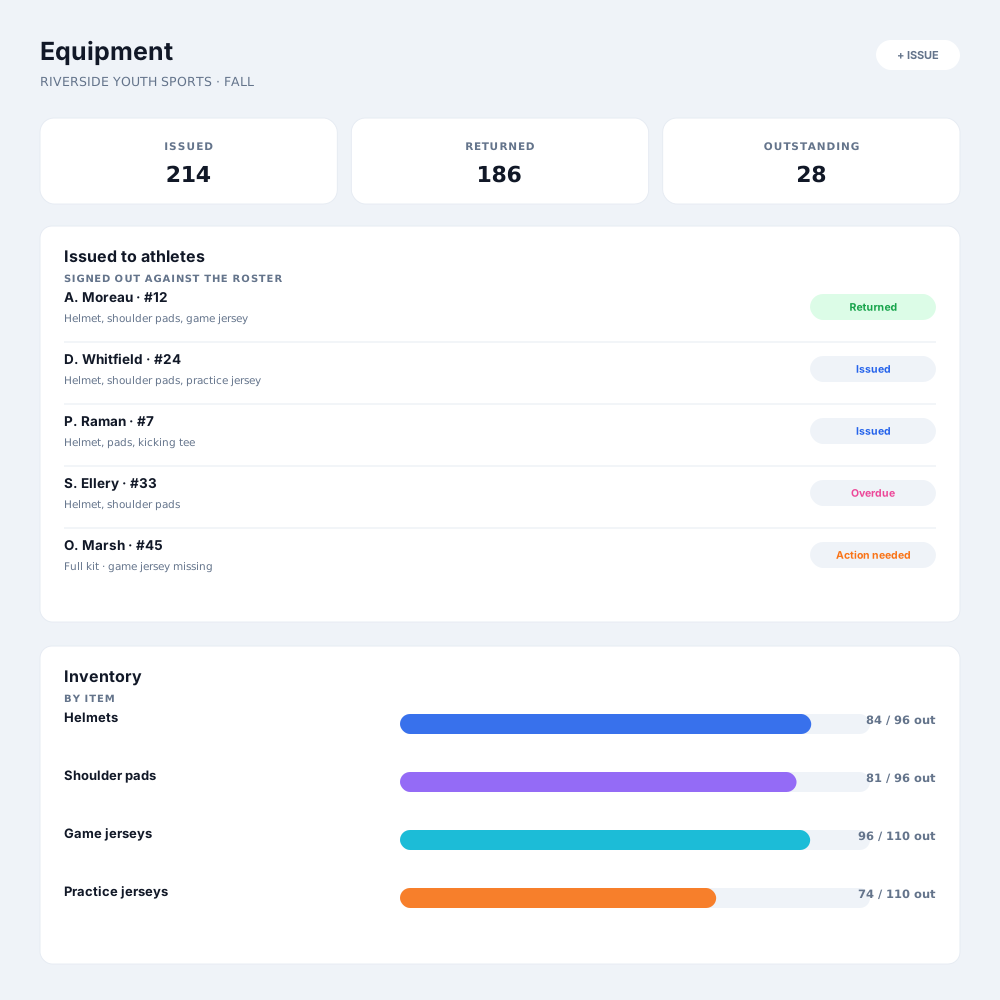
Yes. Kit signed out against the roster shows as issued, returned or overdue, which matters when an association owns the helmets and the jerseys.
Yes, where you offer it. Ice is billed in large blocks, so spreading a family’s share across the season is often what keeps a roster full.
Yes. When a game is marked final the result feeds the table and any playoff bracket, so there is no separate standings sheet to reconcile.
Open registration for your next season in minutes, or book a walkthrough and we'll set it up around your divisions and ice calendar.