Only your org and invited staff log in here.
Players, parents, coaches & officials.
We support 30+ sports and keep adding more.

A swim meet is an entry-deadline problem, a heat-sheet problem and a timing problem, in that order. Ligue takes the squad registrations and the meet entries, holds the qualifying times, builds the programme across sessions, and records heat results with splits and personal bests — so the club is not running the season out of three spreadsheets and a printed programme.
Register swimmers into squads with what the sport needs — age, squad level, strokes, existing times and the medical and consent details a club has to hold. Squad moves through the season keep one record, so a swimmer’s times follow them up the programme.
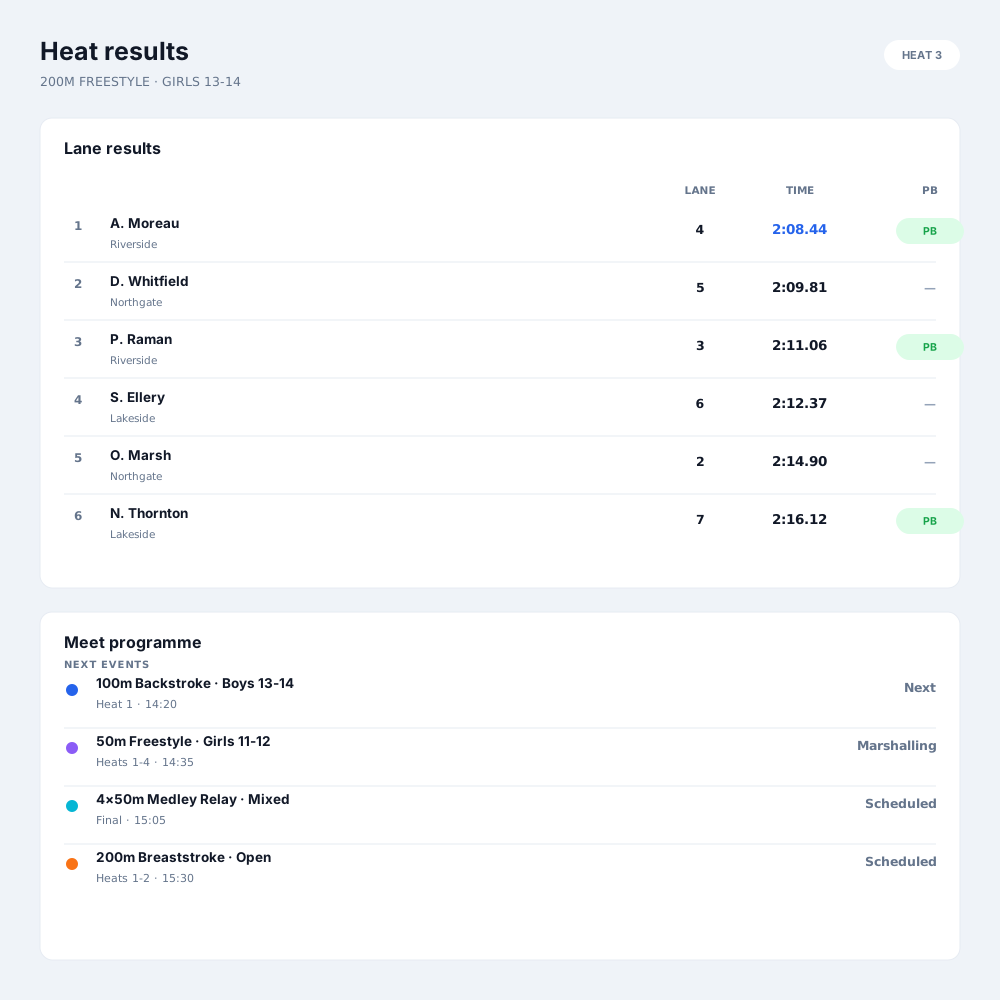
Record heat results with times, splits and lane assignments, and let personal bests flag themselves. A swimmer’s time history builds meet by meet, so improvement is visible to the coach and the family without anyone keeping a separate log of every swim.
Collect squad fees, meet entry fees and membership by card, ACH or Apple Pay, with instalments across a long season. Entry fees can be billed per event, so a swimmer entering four events at a meet is charged correctly without anybody adding it up by hand.
Message a squad about a session change, tell one age group their meet entry closes Friday, and keep coach access separate from parent access. Every coach and poolside volunteer can be background-checked from the same staff record.
Run swim meets, leagues, camps, clinics, academies, and clubs — all from the same platform.
Meets, sessions and entry deadlines are the calendar the whole club runs on. Open entries, close them on a date, and let families enter their swimmer into the events they are qualified for — with the deadline doing the work instead of a coach collecting forms at the poolside.
Age groups and qualifying times are entry rules, so they are checked rather than assumed. A swimmer entering an event they do not have the time for is visible before the programme is built, which saves the conversation on the morning of the meet.
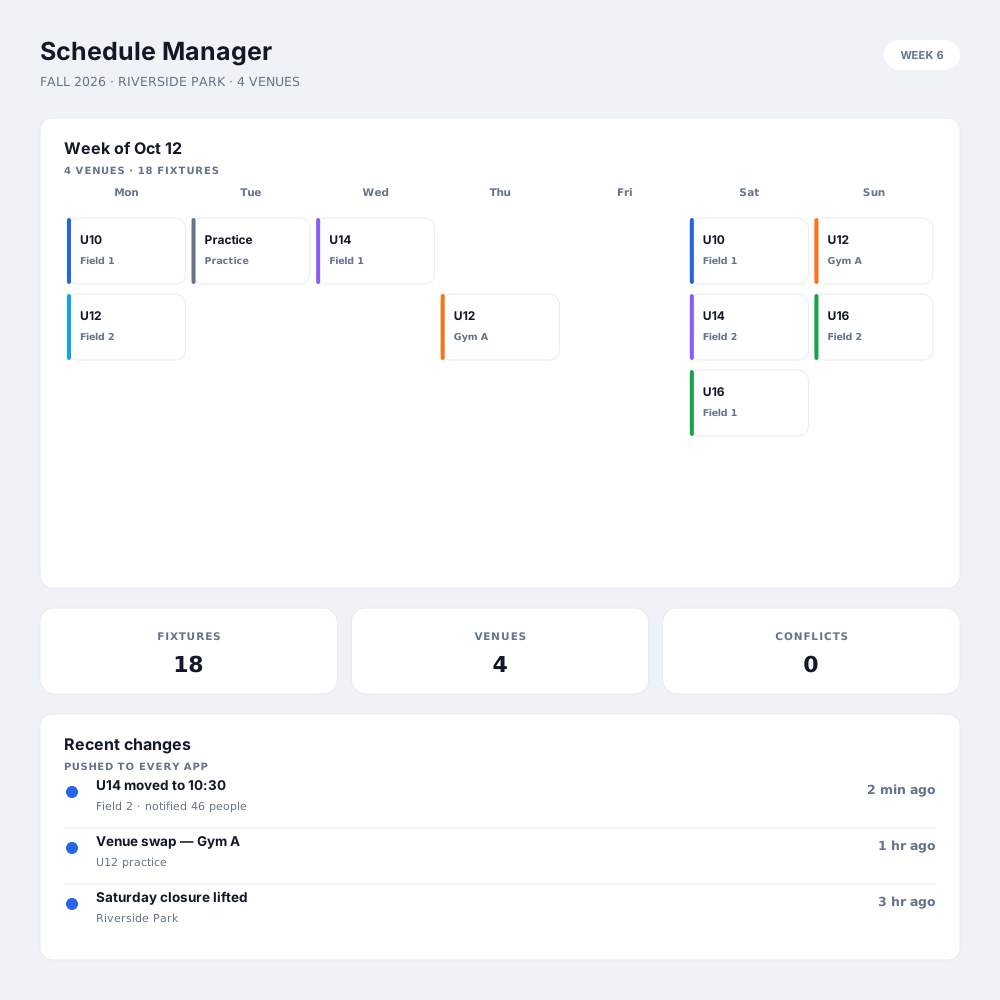
Build the programme across sessions with heats, lanes and relays laid out, so coaches know when their swimmers are marshalling and families know roughly when to be poolside. A session running late is one change that everybody sees rather than a rumour down the side of the pool.
Times, splits and personal bests are what a swimmer actually follows. Every recorded swim adds to their history, so progression across a season and across years is visible, and the club has a complete record rather than a drawer of printed result sheets.
Yes. Heat results are recorded with times, splits and lane assignments, and personal bests are flagged against the swimmer’s existing history.
It does. Open entries, close them on a date, and let families enter their swimmer into events — with qualifying times checked rather than assumed.
Yes. A swimmer entering several events is charged correctly for each one, so nobody is adding up entries by hand before invoicing a family.
The programme is built across sessions with heats, lanes and relays laid out, so coaches know when swimmers are marshalling and families know when to be poolside.
Yes. Every recorded swim adds to the athlete’s history, so progression across seasons is visible and follows them as they move up squads.
Yes. Squads at different levels sit inside one organization, and a swimmer moving between them keeps a single record and one set of times.
Open registration or meet entries in minutes, or book a walkthrough and we'll set it up around your squads and meet calendar.